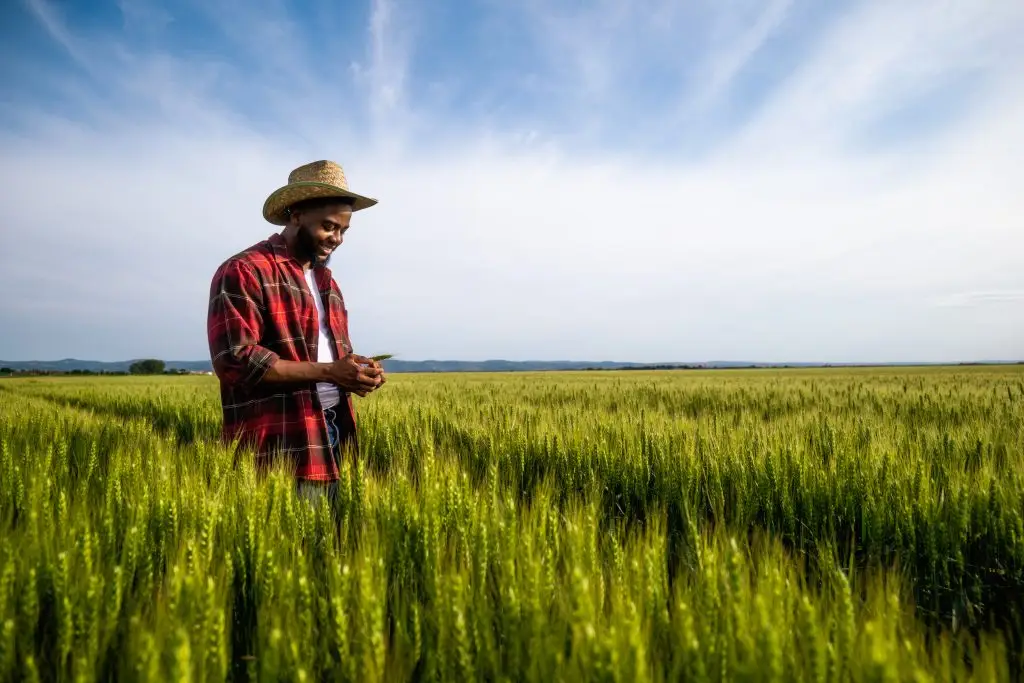
When He visited earth, Jesus laid aside His regal purple robe to don the coarse dress of the common man.
When Jesus laid down the scepter, He picked up a hammer. He gave up stardust for sawdust. He exchanged the singing of angels for the pounding of nails. He went from framing worlds to framing houses. If you had shaken His hand, you would have felt the calluses put there by countless hours of physical toil. If you had overheard His conversation, it would have been about measurements, plumb lines, and estimated dates of completion.
Yes, Jesus was a carpenter (Mark 6:3), but why? He could have been anything. Unlike us, He was not limited by natural talent or opportunity. Nothing was beyond His capability or beyond His control. He was a jack-of-all-trades, a ten-talent man, a prodigy, and a genius all rolled into one. He could have been born into any family circumstance He wanted or attended any educational institution He chose. He could have had any profession.
This line of reasoning presents some interesting possibilities. Jesus did not choose to be a farmer. There would have been some logic in the Son of God coming as a farmer. He was the One who gave us “seedtime and harvest” in the first place (Genesis 8:22; John 1:3). He created the very earth and put life into the tiny seed (Genesis 1:11–12). He made the earth fertile, trees fruitful, and vegetables edible. He invented the water cycle and gave the former and latter rains in time for harvest (Ecclesiastes 1:7; Jeremiah 5:24; Matthew 5:45). To be the provider for man’s basic needs would be appropriate for the One who had given His people manna from heaven (Exodus 16), Israel a land that flowed with milk and honey (Exodus 3:8; 13:5), and Elijah and the widow a constantly full flour barrel and oil cruse (1 Kings 17:14).
Nonetheless, so far as we know, Jesus never pushed a plow nor picked a tomato. He never inhaled the scent of newly turned earth nor felt the sweat run down His back as He picked beans under a hot July sun. He never smiled as He saw the first bud breaking the ground in the spring, or sighed as the last wagonload of produce came out of the field in the fall.
This is all true, but He was still the “Sower who went out to sow” (Matthew 13:3). His seed brought forth thirtyfold, sixtyfold, and a hundredfold (Mark 4:8). He has “filled the hungry with good things, and the rich He has sent away empty” (Luke 1:53). And on Pentecost, He watched as His crop brought forth three thousand souls (Acts 2:41).
What is involved in Jesus being the Sower?
JESUS PURCHASED A FARM
He has a big, expensive farm—the whole world (Psalm 24:1; Mark 16:15). Someone calculated that there are 1,486,471,876,165 acres in the world. The average cost is about $1500/acre (in the U.S.), so using that as a base figure, one could theoretically purchase the surface of the earth for $2,229,707,814,247,500. As much as two quadrillion is, it is not as much as the purchase price for Jesus’ farm; that cost Him His own blood (Acts 20:28).
JESUS SOWS SEEDS
The seed of the kingdom still possesses life-generating power (Luke 8:11; Mark 4:14). The Holy Spirit works through that Word in conversion (Ephesians 6:17).
Why is the Word compared to seed? Both seem insignificant but possess great power (Genesis 1:11; Romans 1:16). A small acorn looks harmless enough, but given the right conditions, it can grow large enough to remove a house from its foundations. God’s Word, like a seed, is “living and powerful” (Hebrews 4:12; Galatians 6:7–8; cf. 2 Timothy 4:2). Unlike men’s written words, God’s Word has life in it; that life can be imparted to those who believe and obey it. It can generate new life. No other book can do that.
This seed grows in only one place: the human heart (Luke 8:15). There are four kinds of soil (hearts):
- Wayside soil: the hardhearted hearer (Matthew 13:19; Luke 8:11–12). If a person continues in this hardened condition, he will never be saved (2 Corinthians 4:3). This is one reason it is important to reach young people before they become hardened in sin (Ecclesiastes 12:1).
- Shallow soil: the stony place hearer (Matthew 13:20–21; Luke 8:13). We are warned, “Be doers of the word, and not hearers only, deceiving yourselves” (James 1:22).
- Divided soil: the thorny place hearer (Matthew 13:22; Luke 8:14). Just as weeds grow in a field, selfishness, lust, dishonesty, relativism, ungodly tolerance, and immorality can grow in our hearts. We can ignore them and let them choke the Word, or pull them out and save our souls.
- Receptive soil: the good ground hearer (Matthew 13:23; Luke 8:15). The seeds in the parable are all of the same nature, sown from the same bag by the same sower. The only variable is the type of soil they encounter.
JESUS PRUNES VINES
“I am the true vine, and My Father is the vinedresser. Every branch in Me that does not bear fruit He takes away; and every branch that bears fruit He prunes, that it may bear more fruit” (John 15:1–2). Jesus stays involved in the lives of His
JESUS HARVESTS FRUIT
Jesus wants to pick you and me as choice fruit and store us forever in His celestial barn. Sure, most people want to live in a mansion, but a barn will satisfy me—but not just any barn. I want to live in God’s barn! In the Parable of the Tares, Jesus pictures the end of the world as a harvest when weeds and wheat are separated. The tares (representing the ungodly) will be bundled and burned—lost in the lake of fire. The wheat will be gathered into the owner’s barn—God’s barn—heaven (Matthew 13:30).
For someone who never plowed a field, Jesus surely has done a lot of farming.