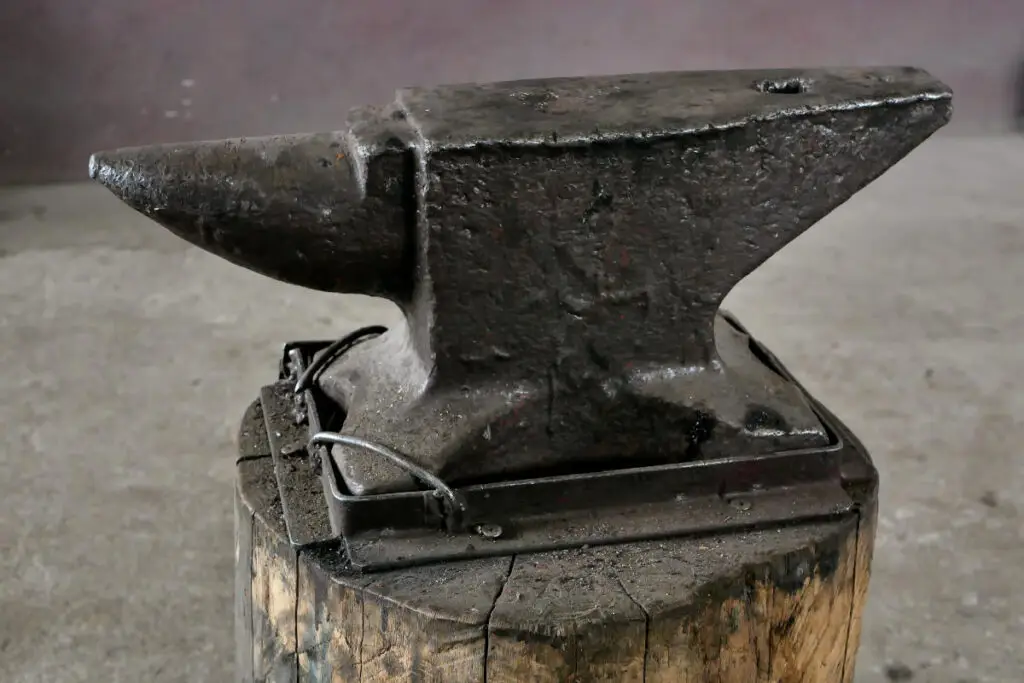
Last eve I paused beside a blacksmith’s door,
And heard the anvil ring the vesper chime;
Then looking, I saw upon the floor,
Old hammers worn with beating years of time.
“How many anvils have you had,” said I,
“To wear and batter all these hammers so?”
“Just one,” said he, and then with twinkling eye,
“The anvil wears the hammers out, you know.”
“And so,” I thought, “The anvil of God’s Word,
For ages skeptic blows have beat upon,
Yet, though the noise of falling blows was heard,
The anvil is unchanged, the hammers gone.”
—Reuben Saillens
In spite of persecution, perversion, criticism, abuse, and time, the Bible has survived intact. It is an anvil that has worn out many skeptic hammers. Portions have been translated into over one thousand seven hundred languages, and it has been copied and circulated more extensively than any other literature (cf. 1 Pet. 1:23). Many have attempted to destroy the Bible. Robert Ingersoll, an American agnostic, for instance, once held up a copy of the Bible and arrogantly asserted, “In fifteen years I will have this book in the morgue.” Ingersoll was correct in affirming that something would be in the morgue in fifteen years, but it wasn’t the Bible. It was Robert Ingersoll. Furthermore, after his death, a man by the name of Robert Garry sat and wrote Bible lessons at the very desk at which Mr. Ingersoll had worked to try to discredit the Bible.
Mock on, mock on, Voltaire, Rousseau;
Mock on, mock on; ’tis all in vain!
You through the dust against the wind,
And the wind blows it back again.
“…the word of God which liveth and abideth forever” —1 Peter 1:23