
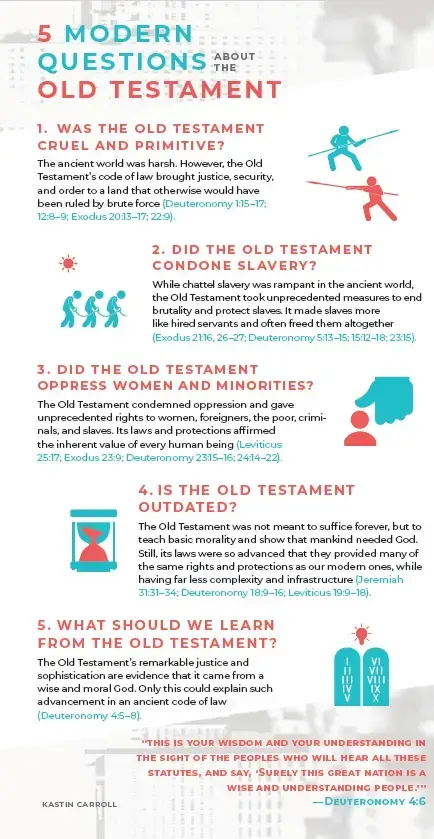
- WAS THE OLD TESTAMENT CRUEL AND PRIMITIVE?
The ancient world was harsh. However, the Old Testament’s code of law brought justice, security, and order to a land that otherwise would have been ruled by brute force (Deuteronomy 1:15–17;12:8–9; Exodus 20:13–17; 22:9). - DID THE OLD TESTAMENT CONDONE SLAVERY?
While chattel slavery was rampant in the ancient world, the Old Testament took unprecedented measures to end brutality and protect slaves. It made slaves more like hired servants and often freed them altogether (Exodus 21:16, 26–27; Deuteronomy 5:13–15; 15:12–18; 23:15). - DID THE OLD TESTAMENT OPPRESS WOMEN AND MINORITIES?
The Old Testament condemned oppression and gave unprecedented rights to women, foreigners, the poor, criminals, and slaves. Its laws and protections affirmed the inherent value of every human being (Leviticus 25:17; Exodus 23:9; Deuteronomy 23:15–16; 24:14–22). - IS THE OLD TESTAMENT OUTDATED?
The Old Testament was not meant to suffice forever, but to teach basic morality and show that mankind needed God. Still, its laws were so advanced that they provided many of the same rights and protections as our modern ones, while having far less complexity and infrastructure (Jeremiah 31:31–34; Deuteronomy 18:9–16; Leviticus 19:9–18). - WHAT SHOULD WE LEARN FROM THE OLD TESTAMENT?
The Old Testament’s remarkable justice and sophistication are evidence that it came from a wise and moral God. Only this could explain such advancement in an ancient code of law (Deuteronomy 4:5–8).
— Kastin Carroll
“This is your wisdom and your understanding in the sight of the peoples who will hear all these statutes, and say, ‘Surely this great nation is a wise and understanding people.’” — Deuteronomy 4:6


