
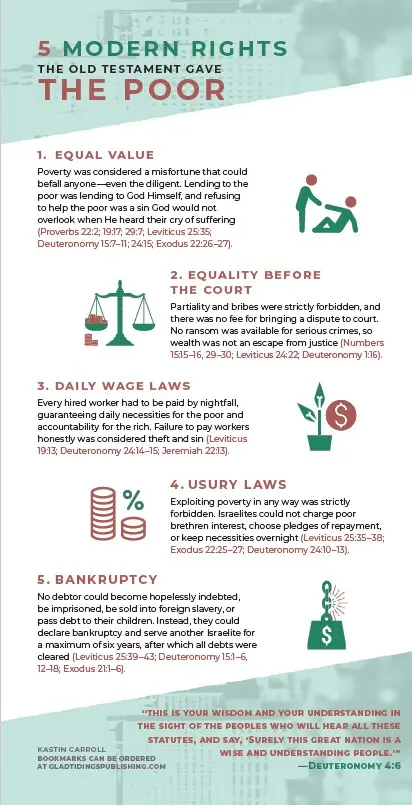
1. EQUAL VALUE
Poverty was considered a misfortune that could befall anyone—even the diligent. Lending to the poor was lending to God Himself, and refusing to help the poor was a sin God would not overlook when He heard their cry of suffering (Proverbs 22:2; 19:17; 29:7; Leviticus 25:35; Deuteronomy 15:7–11; 24:15; Exodus 22:26–27).
2. EQUALITY BEFORE THE COURT
Partiality and bribes were strictly forbidden, and there was no fee for bringing a dispute to court. No ransom was available for serious crimes, so wealth was not an escape from justice (Numbers 15:15–16, 29–30; Leviticus 24:22; Deuteronomy 1:16).
3. DAILY WAGE LAWS
Every hired worker had to be paid by nightfall, guaranteeing daily necessities for the poor and accountability for the rich. Failure to pay workers honestly was considered theft and sin (Leviticus 19:13; Deuteronomy 24:14–15; Jeremiah 22:13).
4. USURY LAWS
Exploiting poverty in any way was strictly forbidden. Israelites could not charge poor brethren interest, choose pledges of repayment, or keep necessities overnight (Leviticus 25:35–38; Exodus 22:25–27; Deuteronomy 24:10–13).
5. BANKRUPTCY
No debtor could become hopelessly indebted, be imprisoned, be sold into foreign slavery, or pass debt to their children. Instead, they could declare bankruptcy and serve another Israelite for a maximum of six years, after which all debts were cleared (Leviticus 25:39–43; Deuteronomy 15:1–6, 12–18; Exodus 21:1–6).
—Kastin Carroll
“This is your wisdom and your understanding in the sight of the peoples who will hear all these statutes, and say, ‘Surely this great nation is a wise and understanding people.’” — Deuteronomy 4:6


