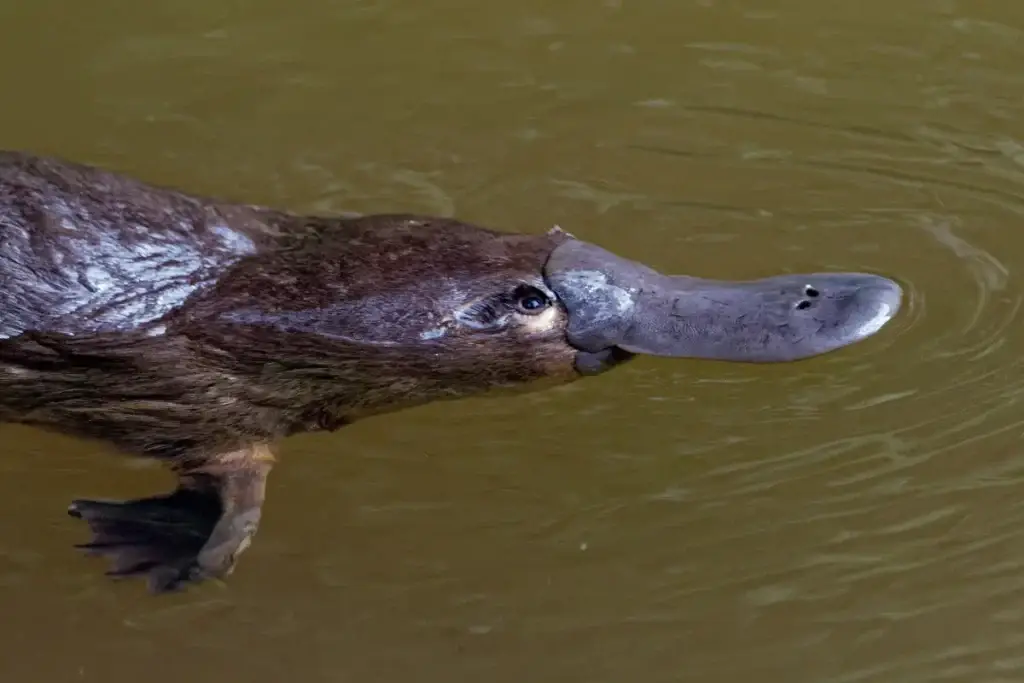
Scientists classify the platypus as a mammal, but it is unlike any other mammal you’ve ever seen. It is about the size of a house cat with fur thicker than that of a polar bear. It can store food in its mouth like a chipmunk and lay eggs like a turtle. It has a beaver-like tail, a duck-like bill, and rooster-like spurs. What’s more, it produces venom like a snake.
This unique animal has a perfectly designed tail, which it uses both to store fat and to maneuver easily in water. Its fur is so dense that it can trap a layer of air next to its skin, which works as insulation to keep the platypus warm in cold waters. Platypuses also have wonderfully designed otter-like webbed feet.
Surely most impressive is the fact that the platypus completely closes its eyes and ears underwater when searching for food, yet it finds its prey very effectively. Rather than clumsily tumbling bill-first into the bottoms of rivers and streams in hopes of stumbling upon lunch, this curious creature has an extremely sensitive snout. Scientists have learned that the platypus’s leathery bill has a complex electroreceptor system in it, which allows the platypus to sense even the very weak electric impulses in the muscles of its prey, including earthworms and tadpoles, which often are hiding under the mud and rocks.
Although evolutionists would have us believe that this unique, anatomically and physiologically diverse animal is the product of millions of years of evolution, why not ask yourself if the design and diversity of the platypus actually declares the existence of a Grand Designer?
—Eric Lyons